
When News breaks, ... we fix it
A customer recently asked if we had a CAGE code. Well that was something new to me, but at the time no, and I checked with a friend who does DoD work as to what that was, and he said pretty easy to set it up yourself.
Luckily as a corporation we already had a Tax ID number, and for another client eons ago we got a DUNs number so l plugged them into the system.
And I have to tip my hat to Russell with the Defense Logistics Agency, who must have been working from home after hours granted us a number within minutes of the request. So now we are 8W2R9 in the CAGE system. Is this worthy of a blog post, well at least I will know where to look it up if I need it. We've entered all the data into the SAM.gov system and should show up there in a few days.
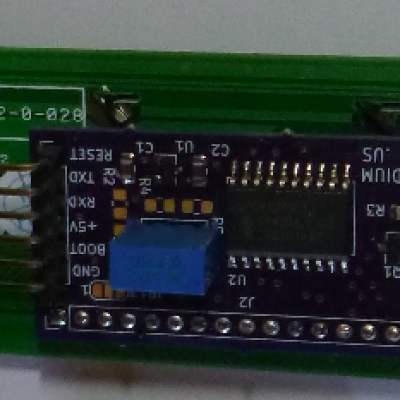
About 6 years ago we did a port of our ARM BASIC to the LPC812. While we built a handful of boards, it never became a product, as the LPC1114 came along and became our focus.
Though recently we needed a smarter interface for character LCD displays, and the LPC812 was a perfect fit.
A while back I wrote a couple line example for an IAP (In Application Program) access from BASIC. Tod took this and expanded it to access the EEPROM of the ARMstamp.
This code takes advantage of the inline ASM instructions in ARMbasic. In the LPC11U37 ARMstamp access to the EEPROM is only through IAP calls.
Below is the code for that.
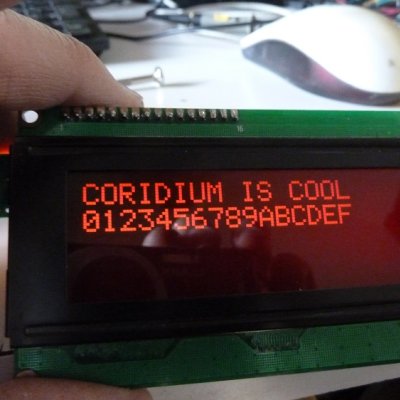
OSHpark got me boards before UPS got me parts. Both came together yesterday, so I built up 6 PCBs, sending some off to Tod and Olzeke beta testers. Grabbed a 4x20 New Haven display that was sitting here in a bin, and mated the 2 together. It passed the smoke test, and with a 1 line program, I could see the default display come up.(alternate lines on and off)
IO(3)=1 ' turn on Backlight transistor drive
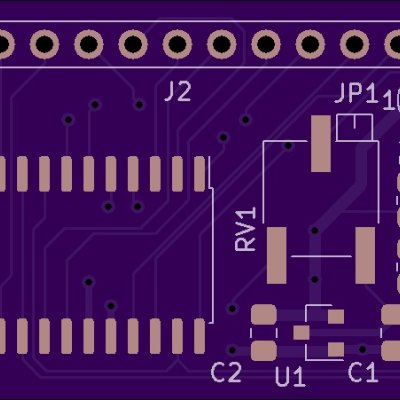
Tod's been working on a super-duper breadboard system. No doubt it has every bell and whistle imaginable piled on top of a kitchen sink. One feature is a line based LCD. Now these are real cheap these days, but they usually use a PCF8574 I2C I/O expander. Not that I2C is bad, but to write a byte into the LCD takes at least 8 I2C operations, not to mention that for whatever reason I2C takes lots of interrupts and states in the software. Serial UARTs and SPI both potentially faster and the hardware on the micro is such, you write a byte and go away.

Many DIY's shy away from surface mount resistors and capacitors in boards they design. But I think once you do a couple of times, it is actually quicker to use 1206 components than bending leads for through hole parts and flipping the board over and soldering, then trimming the leads.
So here I a...
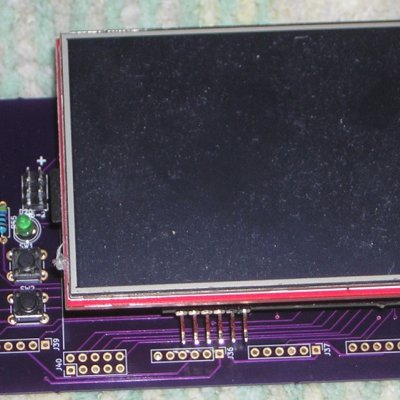
Olzeke took the lockdown and holidays to complete a KiCAD project. He built a breakout board for the LPC54005 and LCD display.

Happy New Year. Kicked off the year with a new PCB design. This design is aimed at the ARMstamp and LPC1768mBed boards, as well as Arduino and PMod peripheral boards.
Power input with 5V regulator, RJ45 Ethernet and USB for the mBed. Terminal strips on the other end and a large prototyping area,

Merry Christmas and Happy New Year from Coridium. Quiet here with Nanny Newsome shutting down the state. One of our Linux users reported an error in the Show Project menu, which also would affect the search of the whole project. Some tweaks to the BASICtools Tcl code and that has been fixed. The links here and below have been updated.